May 2026
I’ve never been so active in my notes as now.
In fact, I don’t even consider them as “notes” anymore.
I believe I have finally achieved the concept of a “second brain”. If I don’t I might be very close to it.
I wasn’t happy with my two methods of note taking using Google Keep and Evernote in parallel. The former I used for fleeting notes and the latter for storing them for good and achieving. I also used Evernote for web clipping, which is quite easy to with the help of its browser extension.
I was using this two-app system for more than 10 years.
Both tools were fine, but there was something that kept pounding my head to the point I decided I needed to change.
I needed to make my life simpler by using simpler tools.
I needed notes to be:
- portable
- open (as in open-standards)
- more private
- more reusable
This last point has to do with AI and the ability to have contents of a note processed by different models over time.
Evernote has this feature now at the time of this writing but, it’s something of it’s own, meaning, it’s proprietary and a kind of a “black box”. I can only expect it to work as Evernote tells me how it’s going to work.
I don’t like this. I want something different.
So I’m building my own “note taking” app which now I refer more as a second brain.
It has roughly 200 items after a month’s usage. Project that number to a 10 year time span and you’ll get way more than the current 6k notes I was able to create in Evernote.
The key characteristics that unlocks this fast growth are described below.
Search orientation
Whenever the app loads, the search box gain focus and is ready to work.

Search results appear down below. I can access results by just hitting Tab then Enter to the item I want to open.

If I’m not happy with the results, the focus is still in the search box, so I can either search again or clear the typed content and hit Enter, and I’ll be back to the index page with all recent notes.
The takeaway: I can lookup for things in just a few seconds. A fraction of the time it would take in Keep or Evernote. Results come up in milliseconds.
Adding new notes
Or “items”. I call them items and they are stored in a database named “items”. I’m using “notes” here just as a reference to a generic concept.
Adding a new note is as easy as hitting Shift + Tab then Enter. It will give me this boring dated looking html form, but it works.

I can add a title, a high level link I usually use to reference the source of that content and the main content itself.
The main content input will accept and parse markdown.

And also HTML.

Adding fast one-line notes
This characteristic is my hook for reinforcing the idea of a “second brain”.
When we think, we just do it, we don’t navigate through an UI. There is no interface. It’s just “automagic”.
With that in mind (no pun intended), adding items to a second brain should be as simple and as fast as possible.
Like this:
- Shift + Tab, Enter
[form vazio]
2. Type in

3. Hit Enter to save and the item will be there

All this took me 2 seconds.
This level of simplicity allows the constant adding of tiny bits of information to the second brain. It is no different from how we keep a great deal of information in our head, sometimes just a sentence, or a name.

This method, this practice, this habit or what have you can be useful. In most situations you don’t need access to a full encyclopedic article just to access one bit of information.
A good example in the screenshot above. An item reads: “Christopher Nolan didn’t go to college”. That’s wrong. He went to college, but not for film making or arts. He studied English. I learned that yesterday by watching him on an interview. So I can easily change just that bit.

The much simpler interface allows this kind of change and usage. The UI is not expecting to render me a card with a title, some characters from the body and a thumbnail image. My brain don’t want that either. It wants less information because it is, by default, already kind of overloaded with other stuff.
No links between notes, no node maps, no zettelkasten
Because otherwise someone would have to manage those things. Someone, the user.
I recognize the value of those features and the zettelkasten as a practice. But they don’t add value to me or my work at this point in my life.
I needed a tool to help me reduce my cognitive load and memory (of lack of it).
I needed a tool to help me both create and find information at the least required effort.
I think I got it now.
September 2024
I’m not taking as many notes as I was used to take.
It has nothing to do with motivation, but with function or… utility.
Until before the C-19 pandemics, note taking was for me a form of extending my brain from an utilitarian perspective.
My note included pieces of knowledge I understood were “closer to the action”, meaning that I could use them in real life to create something new.
In other words, and here comes the catch, without that knowledge I would be in disadvantage to act upon the pursue of my goals. Those notes were empowering.
And they were somewhat rare, sometimes, unique.
All those many hours looking up things in Stack Overflow to compile one single note with the necessary information to build a server from scratch, or to troubleshoot a database issue, were well spent because, afterwards, I ended up having new content I have created through the combination of knowledge and information.
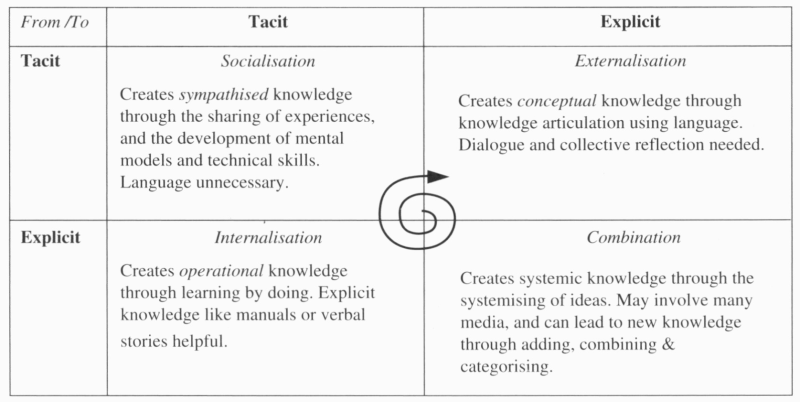
That combination of my knowledge with somebody else’s knowledge previously externalized was key for my learning process, as I could then internalize new knowledge and use it.
At least, I could have the note for future reference.
Fast forward to 2024, I’ve got this disturbing feeling that I won’t need to take those notes anymore.
Large Language Models (LLMs) have most of the notes… already combined. And it is creating more and more notes as we speak. It’s unstoppable.
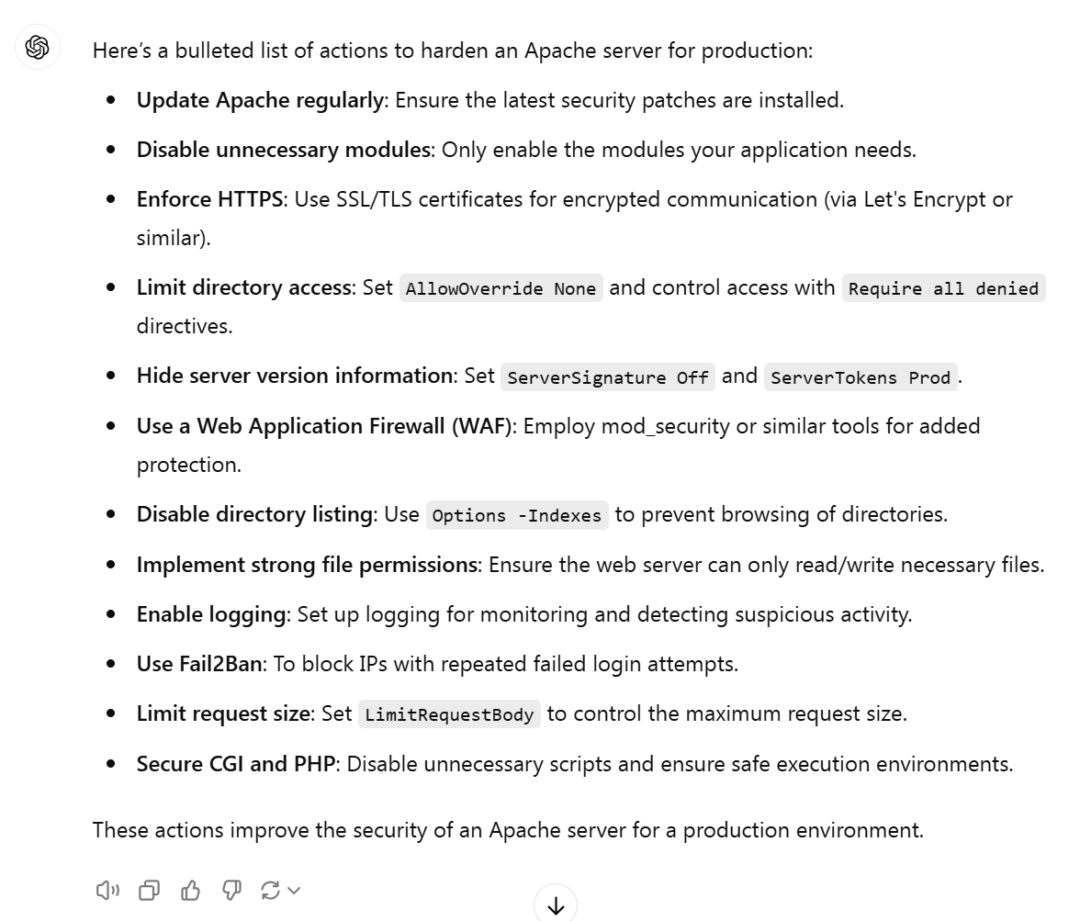
I don’t need to search my notes for things like “how to harden an Apache server for production” because I can simply ask an LLM. And if I decide to take action and configure the server, I’ll know the LLM will be standing by to provide new “notes”, new knowledge, to me.
So, general notes, the kind of “I’ll keep this noted so I’ll know” notes are dead.
Thankfully, public LLMs are unaware of most, if not all, of my personal projects and the thoughts that are in and go through my head.
I could be asking any LLM about the cyberbullying project I’m working on. The answer will be a ton of questions about it. The LLM will try to learn about my project “on the fly” before start answering my questions. In principle, LLMs know zero about my things.
Some personalized LLMs are coming though. Open source models you can download to your “cloud” and run privately so it could learn your things. This is the future and will be mainstream one day in any cell phone.
Until that happens, keeping personal notes on personal stuff is the only way to “persist” that knowledge outside your brain.
The kind of personal note I believe is worth keeping is the one about:
- experiences (added on April 2025)
- feelings
- opinions
Again, this is something LLMs won’t know if you ask them. (by April 2025, yes, they will. As I’m writing this, some LLMs do keep user’s memories and use them to process data. Tools are being developed to transpose memories between LLMs at any time, for example, https://x.com/DhravyaShah/status/1912544775536066772)
— “What was my opinion about XYZ issue back in 2009?”
If you had kept that note with you, you should be able to revisit it and be amazed with the way you thought about the topic. Even your thinking and writing were different, of course, you were a completely different person back then. You’ve made your present self a favor in keeping that note for future consultation.
In early 2025 I began rereading Taleb’s Black Swan. There is a section right in the beginning of the book in which Taleb comments about a journalist who wrote a book after the WW2 in which he reviews his own notes taken pre and during the war. According to him, there was a complete naïveté about how Hitler’s party was gradually taking over segments of the German society and preparing for the worst of war. His notes showed the journalist had to clue about what was really taking place those days. And this is a great philosophical development (as per Taleb’s words). We should always take notes of what we think is going on, so when the veil is finally lifted we can evaluate how distant our perception and thought were from the truth.
I have made one particular note public for this reason. It presents my thoughts about C-19 vaccines and the reasons I would not take them back then. (written in Portuguese)
I frequently go back to that note and reread it to see if I still agree with my older version of me.
What if I asked LLM about that?
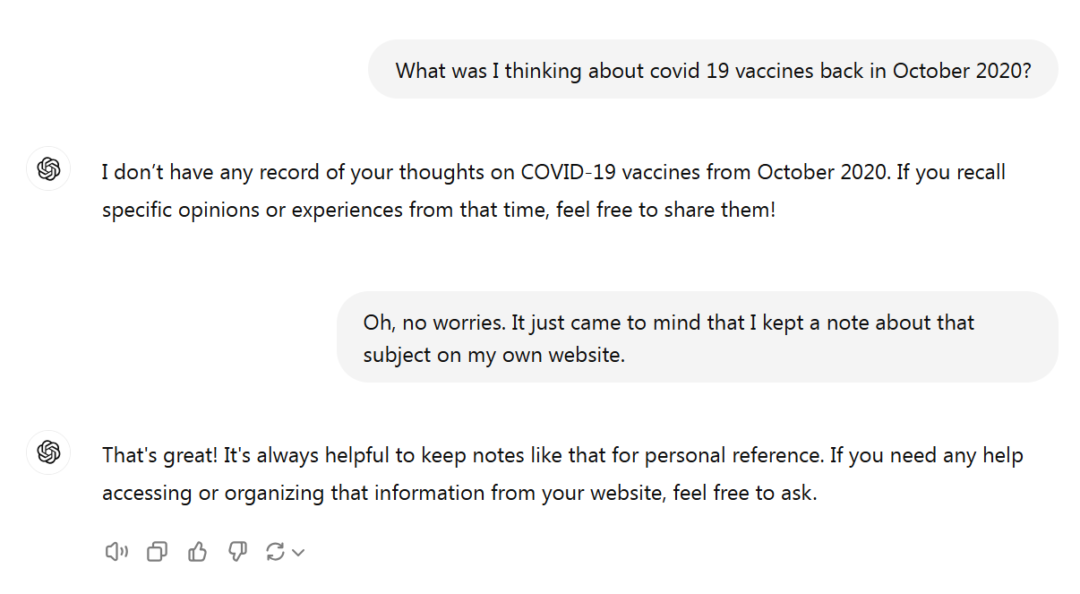
Yes. Keeping notes is really great.
Well, in case you came for the Apache hardening topic. Here is a high level list of actions I’ve got from an LLM (Open.ai ChatGPT model 4o) in September 2024. I recommend you generate a new note yourself by asking your favorite LLM, especially if you are in the future to this text.