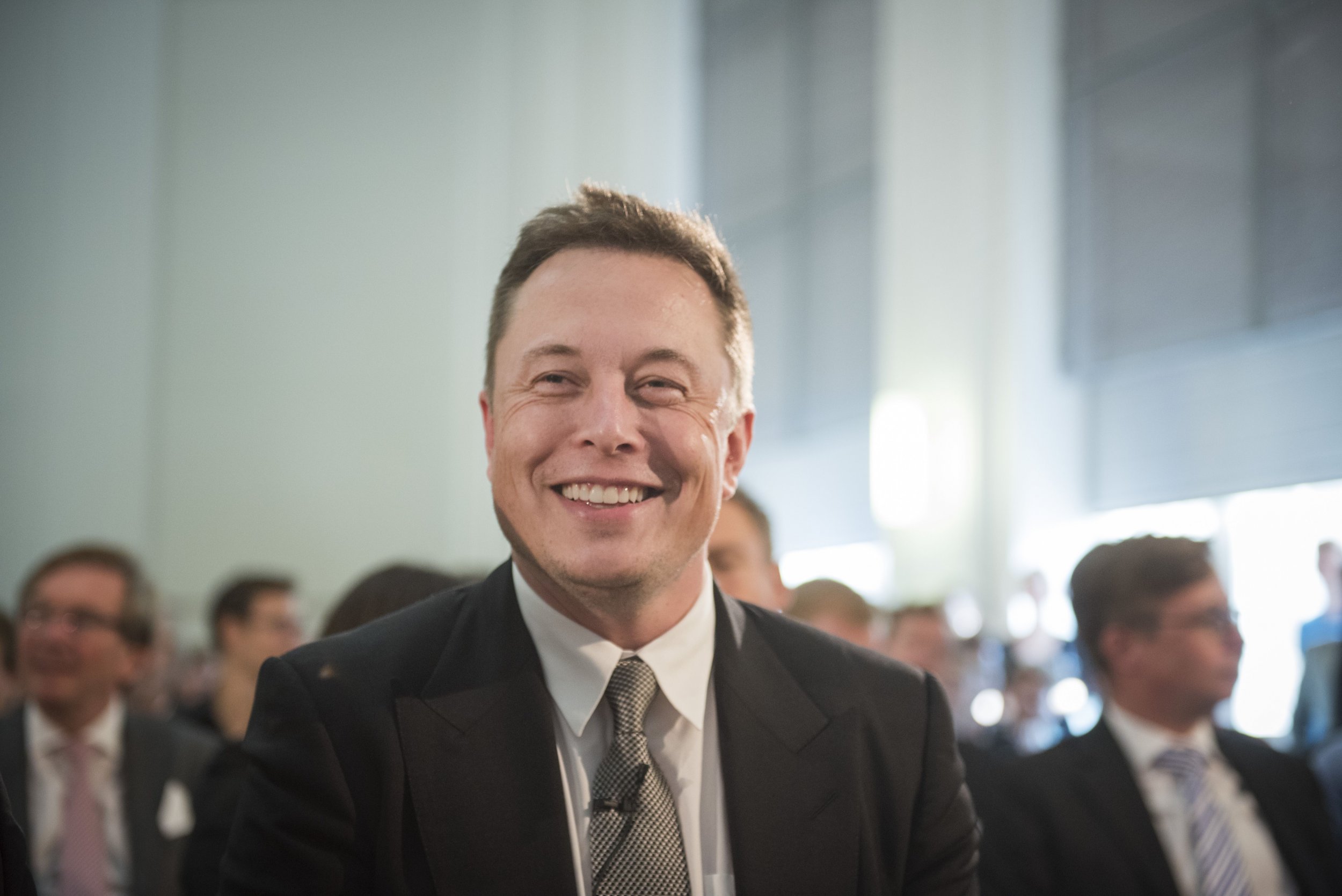
Elon Musk once said something about resource allocation that really stuck with me. Essentially: past a certain level of wealth, money is no longer about consumption; it’s about capital allocation.
That one sentence changes everything.
At its core, economics is just an allocation problem. You have finite resources and infinite uses. Who gets to decide what goes where?
Imagine a playground. 100 kids, and Pokémon card packs are handed out at random. You just let it play out. Very quickly, an order emerges. The skilled players accumulate the rare cards, the collectors organize them, and the negotiators strike deals. Nobody planned it. And yet, every card ends up in the hands of whoever derives the most value from it. The system maximizes the total happiness of the playground. That is the invisible hand.
Now, enter the teacher. She thinks this is “unfair.” Leo has 50 cards; Tom has 3. She confiscates, redistributes, and enforces equality. Three immediate effects follow:
- The top players stop playing—why bother?
- The struggling players have no reason to improve—they’ll get their share regardless.
- Trading collapses.
The playground becomes equal, but it’s dead. She maximized equality by destroying happiness.
The teacher’s problem is that she cannot possibly possess the information that the playground held collectively. This is Mises’s Economic Calculation Problem, formulated in 1920. The USSR tried to solve it for 70 years with the Gosplan. The result? Shortages, bread lines, and total collapse. Not because the Soviets were stupid, but because the problem is mathematically unsolvable in a centralized system.
When Musk has $200 billion, he isn’t consuming; he’s allocating. SpaceX, Starlink, Neuralink, xAI. Every dollar is a bet on the future. And he has a proven track record: PayPal, Tesla, SpaceX. He has demonstrated that he knows how to identify massive problems and allocate resources to them with spectacular yields.
The State also has a track record. Collapsing hospitals, declining education, exploding debt, and public services that decay despite ever-rising budgets. The market identifies good allocators; politics identifies good communicators.
Profit isn’t an end in itself; it’s a signal. It says: you allocated rare resources to a use that people value enough to pay for. The higher the profit, the greater the value creation. When Starlink becomes profitable, it means millions of people in rural areas finally have internet. When a government ministry is in the red, it means it is consuming more than it produces. One creates, the other destroys—and we call it “redistribution.”
In our societies, there are two categories of actors: the Entrepreneurs and the Bureaucrats.
- The Entrepreneur takes personal risks to identify a problem, mobilize resources, and create a solution. If he fails, he loses. If he succeeds, his customers win, his employees win, his suppliers win, and the State collects taxes. He is the basic building block of human progress.
- The Bureaucrat takes zero personal risk. His salary is guaranteed. At best, he maintains an existing status quo. At worst, he destroys it through over-regulation, forced misallocation, and perverse incentives that discourage producers. But in no case does he create.
Look at the last 50 years. The iPhone, the commercial internet, SpaceX, Tesla, Google, Amazon, Stripe, mRNA vaccines, ChatGPT. All private inventions, driven by entrepreneurs, funded by venture capital. No government ministry has ever invented anything that changed your day-to-day life.
France has become the global laboratory for this “bureaucratic drift.” 57% of its GDP goes to public spending—an absolute record. It has a sprawling administration and a tax system that penalizes wealth creation. The result? A massive decoupling from the United States, Germany, and Switzerland. Brain drain. Deindustrialization. Exploding debt.
The worst part is that misallocation is self-reinforcing. The more the State collects, the less entrepreneurs create. The less they create, the smaller the tax base becomes. So, the State goes further into debt and taxes even more. It’s a perfect negative feedback loop. The teacher thinks she’s helping, while every year the playground produces less.
In our societies, it is the entrepreneurs—always—who move civilization forward. Bureaucrats, at their best, are caretakers; at their worst, they are wrecking balls. No society has ever progressed by taxing its creators to subsidize its managers.
The question is never “who has how much.” It is: Who is best equipped to allocate the next unit of resources to maximize the future of humanity?
For the last 200 years, the answer hasn’t changed. It’s not the bureaucrats.

Leave a Reply
You must be logged in to post a comment.